How Small Businesses Can Use GMB Insights for Tax and Growth Planning

If you're a business owner or have just started a small business in the US, you might know how tough it is to operate it.
You're stuck with handling customers, keeping up with competitors, and at the same time worrying about your taxes and future growth.
Many entrepreneurs don't realize that Google My Business, a free tool they already have, can actually help them beyond just local SEO. You can also use GMB insights for business tax strategy and smart growth planning.
With the right help from experts like Gonukkad, businesses can turn raw Google data into powerful action points.
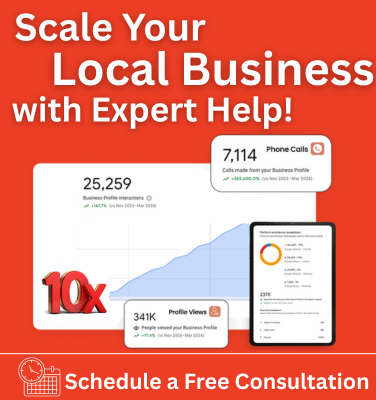
With Gonukkad's GMB optimization services, you can stop guessing and start planning backed by real data straight from Google.
What Exactly Are GMB Insights?
If you have your business listed on Google My Business, you've probably seen the "insights" section. It shows things like:
- How did customers find your listing?
- Whether they searched for you directly or found you by category.
- What actions did they take, such as visiting your site, calling you, or requesting directions?
- Peak times when people look up your business.
In short, this is business data from Google that can show you a lot about customer behavior. But here's the catch: you can use this same data not only to improve marketing but also to plan your taxes and growth strategy.
How to Use GMB Insights for Business Tax Strategy
Most people think of GMB as a marketing dashboard, but it can actually help you with tax planning.
Tracking Marketing Spend
Let's say you run ads or promotions that boost your GMB activity, such as more calls or visits. The data proves your marketing worked.
It means you can clearly claim tax deductions from marketing, since IRS rules allow deductions for promotional expenses.
Clarifying Customer Trends
If insights reveal that most of your customers search for you at specific times of the year, you can align tax payments and growth investments accordingly.
For example, a landscaping company may notice spikes in March and April. That tells you when cash flow peaks and when to set aside money for tax obligations.
Geographic Reports
If GMB indicates that most customers are requesting directions from a nearby city, consider opening a branch there.
Any investment decisions like this also tie into your business tax strategy because new offices or expansions often bring deductions.
Experts like Gonukkad don't just optimize your Google My Business profile but also explain how to read and use your insights for financial planning.
What's the Link Between Local SEO, Taxes, and Growth?
Now, some of you might be wondering, "How can local SEO even connect with taxes?" To understand better, keep reading the pointers below:
Better SEO means more visibility → more sales → higher taxable income.
- But with local SEO tax impact, your marketing costs also increase, which counts as a deductible business expense.
- GMB analytics prove the effectiveness of your campaigns, so your accountant isn't guessing when writing those off
- So good SEO doesn't just bring customers; it gives you a stronger paper trail for tax reporting.
Customer Analytics and Long-Term Planning
Many small businesses skip customer analytics because they find it challenging. But GMB insights are super easy to understand, even if you're not a "numbers person."
Customer calls and clicks: Measure direct ROI of your marketing.
Photo views: See if product and service images are attracting attention.
Search insights: Spot any seasonal patterns.
Using customer analytics, business owners can plan inventory, staffing, and even decide whether to expand services. It's another way GMB data helps you map out not only marketing but also long-term growth planning, USA style.
How Gonukkad Help Small US Businesses
Many business owners open their GMB account, glance at the insights for a few minutes, and then ignore them. That's like buying a treadmill and using it as a coat rack.
Gonukkad's services ensure that doesn't happen:
- A dedicated account manager optimizes your Google My Business profile for better visibility and improved ranking in local searches.
- They regularly monitor insights, filtering out what matters and what doesn't.
- A specialist will align data with business tax strategy, helping you claim legitimate deductions.
- A team of analytics experts also use insights to create actionable growth plans tailored to your US business market.
- They ensure you're not just collecting data, but also making money and saving taxes from it.
Final Thoughts
By using GMB insights for business tax strategy, you're not just preparing for tax season. You're building a smarter, leaner, growth-driven business.
That means smarter deductions, better growth maps, and a stronger competitive edge.
Q. How do GMB insights help with taxes?
A. By tracking marketing performance, you have proof of expenses and ROI, making it easier to claim deductions.
Q. What if I don't understand the graphs and numbers in GMB?
A. That's where experts like Gonukkad come in, explaining it in layperson's terms and connecting it to financial planning.
Q. How does GMB Insights tie into growth planning for small businesses in the USA?
A. US businesses face seasonal demand and high competition. GMB insights help you spot when demand spikes so that you can adjust pricing, staffing, and future investments.
Q. Why not just use an accountant for tax advice?
A. Accountants are familiar with taxes, but they typically don't analyze your GMB or local SEO. Combining insights with tax knowledge is what makes Gonukkad's approach unique.