ChatGPT
 Perplexity
 Claude
 Google AI
 Grok
Grok
Summarize this article with an AI assistant.
E-Invoicing in GST: A Growth Tool for Modern Businesses
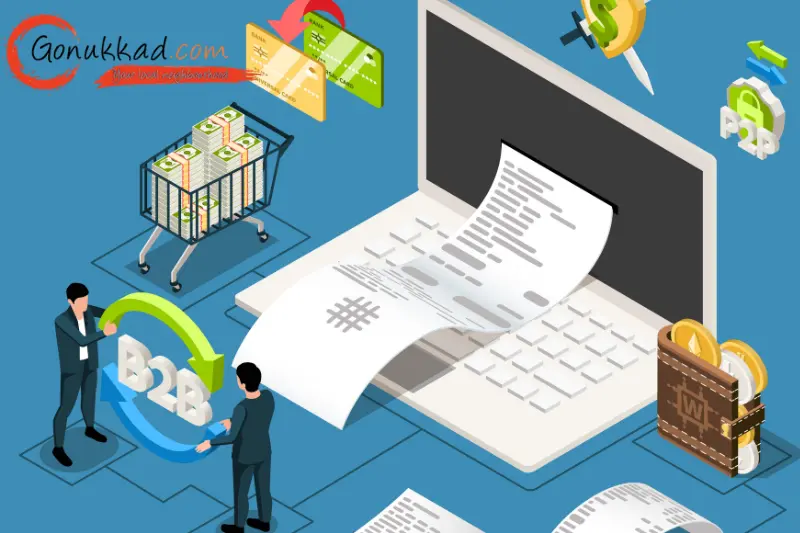
For small businesses and MSMEs in India, handling taxes and invoices often feels confusing and time-consuming. One of the recent big changes in GST is the introduction of E-Invoicing in GST, which has started to impact how businesses create, manage, and submit invoices. Simply put, e-invoicing means generating invoices in a standard digital format through the GST e-invoice portal rather than the old manual method.
- What is E-Invoicing in GST & Why It Matters?
- Who Needs To Follow E-Invoicing Compliance For MSMEs
- How Does The GST E-invoice Generation Process Work
- How Does E-Invoicing Connect With GST Return Filing
- What Are The Exemptions In E-Invoicing For MSMEs
- How Gonukkad Helps MSMEs Businesses Grow
- Conclusion
- Final Thoughts
- FAQs
In this blog, we're going to break down everything about e-invoicing for MSMEs, from what it means, how it works, exemptions, and its link to GST return filing. Plus, we'll also share how Gonukkad can help MSMEs grow with expert business promotion and e-commerce account management services.
Key Takeaways
- You'll understand what exactly E-Invoicing in GST is and why it matters for MSMEs.
- You'll know how the GST e-invoice generation process works step by step.
- Learn about E-Invoicing compliance for MSMEs and whether your business falls under this rule.
- Get details about the E-Invoicing exemption for MSMEs and who doesn't need to worry about it.
- With Gnukkad’s seller account and business promotion services, your small business can scale faster online.
What is E-Invoicing in GST & Why It Matters?
E-Invoicing in GST means creating invoices in an electronic format approved and validated by the government system instead of handwritten or traditional software-generated invoices.
Whenever an invoice is created, it is uploaded to the government's GST e-invoice portal, where it gets an Invoice Reference Number (IRN). It makes sure every transaction is properly tracked and reduces fraud or fake entries.
For MSMEs, this is not just a compliance requirement – it's also a good way to bring more transparency in business. Yes, at first it may seem a bit of extra work, but in the long run, e-invoicing saves time, avoids mismatches, and makes GST return filing straightforward.
Who Needs To Follow E-Invoicing Compliance For MSMEs
In India, not all MSMEs currently fall under the e-invoicing system. The government has kept certain turnover limits. For example:
- At the beginning, e-invoicing was only mandatory for businesses with a turnover above ₹500 crores.
- Later, it was reduced to ₹100 crores, then to ₹50 crores.
- Currently, many MSMEs with an annual turnover of over ₹5 crores need to comply with it.
So, if you are a small business or other MSME operating below the notified limit, you come under the E-Invoicing exemption for MSMEs. But once your business grows and crosses the given threshold, you will have to adopt e-invoicing.
How Does The GST E-invoice Generation Process Work
The government has made e-invoicing very systematic. Here's the simple step-by-step GST e-invoice generation process for MSMEs:
- Create an invoice in your billing or ERP software.
- Upload the invoice details to the GST e-invoice portal.
- The system generates a unique IRN (Invoice Reference Number).
- A QR code is attached to the invoice for validation.
- This approved invoice can be used for both the customer and for E-Invoicing and GST return filing.
This process may look technical, but once you set up the system, it becomes swift.
How Does E-Invoicing Connect With GST Return Filing
One of the biggest benefits of E-Invoicing in GST is that it directly reduces errors while filing GST returns. Since every invoice is already uploaded and approved through the government portal, there are fewer mismatches.
The invoice data flows directly to GST returns (like GSTR-1), reducing manual data entry. It avoids penalties, keeps compliance smooth, and saves time for MSMEs.
What Are The Exemptions In E-Invoicing For MSMEs
The government has clearly defined an E-Invoicing exemption for MSMEs. The following businesses or organisations do not need to generate e-invoices as of now:
- MSMEs with an annual turnover below the prescribed limit.
- Banks and insurers.
- Companies dealing in passenger transport.
- Special Economic Zone (SEZ) units.
It means if your small business is still under a lower turnover, you don't have to worry yet. However, since the government is bringing down the limits step by step, you will eventually need to move into this system. Preparing early makes things smoother.
How Gonukkad Helps MSMEs Businesses Grow
Tax compliance is just one side of running a business. For any MSME – whether it's an ecommerce seller or an established retail shop – growth comes from smart marketing and reaching the right customers.
This is where Gonukkad comes in:
- They handle e-commerce account management for Amazon, Flipkart, or Meesho so that your products reach more buyers.
- They help with business promotion services, including digital marketing, local SEO, and product listing optimisation, to increase visibility.
Imagine running your business without stressing over invoices or GST returns, while your products get promoted to a bigger audience – that's exactly what Gonukkad offers.
Conclusion
E-Invoicing in GST may sound technical, but for MSMEs in India, it is now becoming an essential part of tax compliance and growth. It ensures transparency, makes GST return filing faster, and pushes small businesses toward digital adoption.
If you own an MSME business where online sales can make a big difference, getting expert help from Gonukkad will save you from compliance stress while also boosting your business growth.
Related Post:
1. Documents Required for GST Registration & Procedure to Apply in 2025
2. How To Register For GST in India Online Seller 2025
3. Mastering E-commerce GST Registration: Tips and Steps for Sellers
4. GST Revised Rates 2025 Notification: Complete Guide for SMBs – GoNukkad Insight
FAQs
Q. What is the main benefit of E-Invoicing in GST for MSMEs?
A. It saves time, reduces errors, and makes GST return filing easier by directly uploading invoice data to the GST system.
Q. Do all MSMEs need to follow e-invoicing compliance?
A. No, only those MSMEs crossing the yearly turnover threshold (currently above ₹5 crores) need to comply.
Q. How can I generate an e-invoice as an MSME?
A. You can generate invoices through your billing software and upload them to the GST e-invoice portal, which provides an IRN and QR code for authentication.
Q. What happens if an MSME ignores e-invoicing rules?
A. Penalties and rejection of invoices can happen. It can also block input tax credit, creating financial issues for the business.
Q. How can Gonukkad help MSMEs in both promotions and compliance?
A. Yes, Gonukkad offers expert solutions for e-commerce account management, product promotions, and also supports businesses with compliance needs like GST invoicing.
Supercharge your Business:
Go from surviving to tdriving!
Amplify sales witd our expert account management. Unleash your true potential now!
Call Us