ChatGPT
 Perplexity
 Claude
 Google AI
 Grok
Grok
Summarize this article with an AI assistant.
Q-Commerce vs E-Commerce: What’s the Difference?
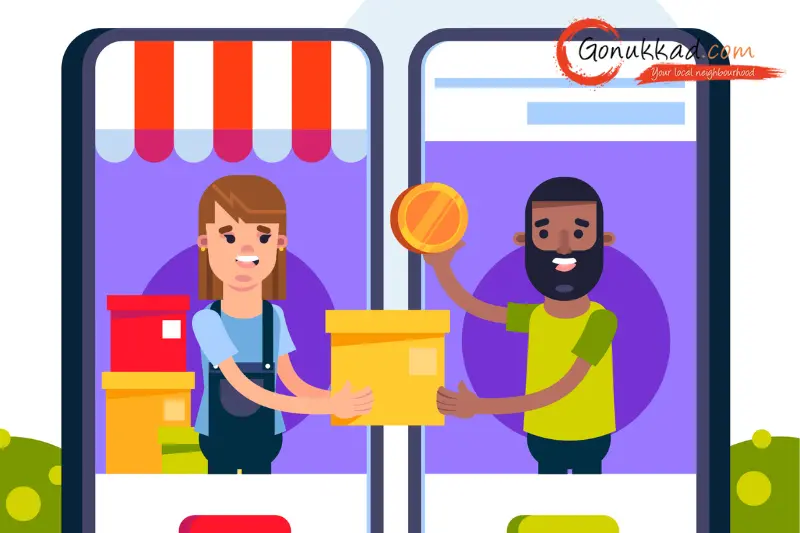
Nowadays, if the Maggi packet doesn't arrive in 10 minutes, we start checking our phones every thirty seconds. This shift in our patience and behaviour is exactly what the debate of E-Commerce vs Quick Commerce is all about. While traditional online shopping paved the way for the digital revolution, Quick Commerce (or Q-Commerce) is the new speed-obsessed kid on the block. For any Indian business owner or local shopkeeper, understanding this change is vital.
In this blog, we will dive deep into the difference between E-Commerce and Quick Commerce, how the Quick Commerce business model actually makes money, and which one fits your business goals. If you are looking to take your business online and don't know where to start, Gonukkad offers expert e-commerce account management services.
Key Takeaways
- E-commerce is for your "planned" shopping (2-5 days), while Quick Commerce is for "instant" needs (10-30 minutes).
- Think of E-commerce for heavy items like TVs or jeans, and Q-commerce for bread, milk, and emergency phone chargers.
- E-commerce uses giant warehouses outside city limits, and Q-commerce uses tiny "Dark Stores" tucked away in busy neighbourhoods.
- E-Commerce delivery vs Quick Commerce delivery is a battle between big courier trucks and local delivery boys on electric scooters.
- Platforms like Gonukkad help startups register and manage their presence on these busy marketplaces.
What is Traditional E-Commerce
When we talk about Quick Commerce vs traditional E-Commerce, we have to start with the basics. Traditional E-commerce refers to platforms like Amazon, Flipkart, or Myntra. It’s like a digital version of a massive wholesale market. You have millions of options, you can compare prices for hours, and you place an order knowing it will come from a different city.
The supply chain here is long. A product is picked from a warehouse, sent to a sorting hub, then to your city’s distribution centre, and finally to your door. It’s efficient for bulk buying or expensive electronics, but it’s too slow for someone who needs onions for dinner right now.
What is Quick Commerce (Q-Commerce)
Quick Commerce is the "speedy" version of online shopping. It’s built on the "hyperlocal" concept. Brands like Zepto, Blinkit, and Swiggy Instamart have changed the game in India.
The Quick Commerce business model relies on having small storage spaces, called "Dark Stores," located every 2-3 kilometres in a city. Because the product is already sitting just a few streets away, the delivery person can reach you in a flash.
Difference between E-Commerce and Quick Commerce
Let’s look at why they are different in a way that’s easy to understand.
| Feature | Traditional E-Commerce | Quick Commerce |
|---|---|---|
| Delivery Time | 2 to 5 Days | 10 to 30 Minutes |
| Product Range | Everything (Laptops, Clothes, Furniture) | Daily Essentials (Milk, Bread, Snacks) |
| Order Size | Usually larger (high value) | Small (even just one chocolate bar) |
| Warehouse | Huge hubs outside the city | Small "Dark Stores" inside the city |
E-Commerce and Quick Commerce Comparison
1. Delivery Speed and Logistics
The most obvious difference between E-Commerce and Quick Commerce is the clock.
- In E-commerce, the goal is "Accuracy and Cost-efficiency."
In Q-commerce, the only goal is "Speed." That is why E-Commerce delivery vs Quick Commerce delivery looks so different.
- Traditional delivery uses national couriers.
- Quick commerce uses a dedicated fleet of local riders, managed by complex AI algorithms to ensure the fastest possible route.
2. The Product Catalogue
You wouldn’t usually buy a double-door refrigerator on a 10-minute delivery app. Similarly, you wouldn't want to wait 4 days for a single bottle of cold drink.
- E-commerce covers "High-Involvement" goods, such as electronics, furniture, and fashion.
- Quick Commerce covers "Low-Involvement" or "Impulse" goods, such as daily groceries, snacks, cleaning supplies, and even small electronics like earphones.
3. Inventory Management
In the Quick Commerce business model, inventory must be 100% accurate. If the app says there are 2 packets of milk left, there must be exactly 2 packets.
If a shopkeeper wants to join this wave, they need high-end tech support. Gonukkad helps sellers stay on top of this by managing their account listings and ensuring that their store remains optimized for the right audience.
Why Should Indian Small Businesses Care
If you are a shopkeeper in India, the rise of Q-commerce might seem scary, but it’s actually a huge opportunity. Many startups are getting registered to act as suppliers for these dark stores. Whether you want to sell on a traditional platform or a quick one, your "digital shopfront" needs to look professional.
Using Gonukkad’s e-commerce account management service is a smart move for any new startup. They don't just set up your account; they help with:
- Professional Product Listing: Making your items look attractive.
- Search Optimization: So customers find your product first.
- Ad Campaigns: Running smart ads to increase your sales.
Is Quick Commerce the Future
While the growth is impressive, it’s not replacing traditional E-commerce. Instead, they are living together. A family might buy their monthly ration of 20kg Aashirvaad Atta from an E-commerce site for a discount. Still, they will order a packet of biscuits from Q-commerce when a guest arrives unexpectedly.
The E-Commerce and Quick Commerce comparison shows that consumer behavior is splitting. We want "Value" from E-commerce and "Time" from Quick Commerce. As a seller, being present where your customers are and having a well-managed account on marketplaces are the secrets to success in 2026.
Conclusion
The difference between E-Commerce and Quick Commerce depends on how much you value time versus variety. E-commerce gives you the world at your doorstep in a few days, while Quick Commerce gives you your neighbourhood store at your doorstep in a few minutes. If you want to grow your existing shop, consider Gonukkad, the best e-commerce account management service
Q. Which one is better for a small seller: Q-Commerce or E-Commerce?
A. If you have a wide variety of unique products, traditional E-commerce is better. If you deal in daily essentials and have a local supply chain, Q-commerce is a great fit.
Q. Why is it called "Quick" commerce?
A. It’s called "Quick" because the entire process from placing the order to the rider reaching your door is designed to happen in under 30 minutes.
Q. Are delivery charges higher in Quick Commerce?
A. Since the company is moving a delivery partner for just one or two items very quickly, they charge a convenience fee.
Q. Can I switch from E-commerce to Q-commerce easily?
A. Services like Gonukkad help you transition by managing your seller accounts on different platforms.
Q. What is the "Last Mile" in delivery?
A. "Last mile" refers to the final step of the journey from the local hub to your doorstep.
Supercharge your Business:
Go from surviving to tdriving!
Amplify sales witd our expert account management. Unleash your true potential now!
Call Us