ChatGPT
 Perplexity
 Claude
 Google AI
 Grok
Grok
Summarize this article with an AI assistant.
How To Start A Footwear Business In India For 2026
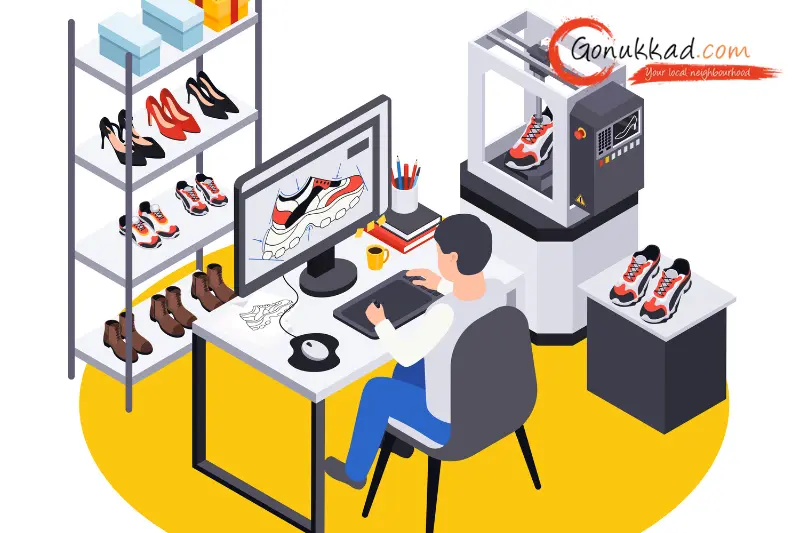
India is currently the second-largest footwear producer in the world, and the industry is growing rapidly. In fact, the Indian footwear market is projected to reach nearly $33.32 billion by 2027. To start a footwear business in India, you need to understand the local market, handle legal paperwork like GST and BIS certifications, and use digital tools to reach your customers.
In this guide, we'll go through simple steps to start a footwear business in India, covering everything from legal paperwork to a cost-effective marketing strategy to grow sales. If you need expert help, consider Gonukkad local business promotion services or ecommerce management services.
Key Takeaways
- Pick a specific niche or category, like Sports Shoes or Women's Ethnic Wear, to build a loyal customer base.
- For a physical store, your profit depends on footfall. On the other hand, for an online store, your profit depends on clicks.
- Most Indians search for "shoe stores near me" on their phones. Therefore, Gonukkad can optimize your local SEO so your shop shows up first.
- Since 2024, the Quality Control Order (QCO) has made ISI marks mandatory.
- It's best to sell shoes both in-store and online, and Gonukkad can manage your seller accounts on Flipkart and Amazon, allowing you to focus on your stock.
How To Start A Footwear Business In India: 9 Practical Steps
Step 1: Define Your Footwear Niche and Target Market
You cannot sell high-end leather boots in a neighborhood where people are looking for affordable, daily wear slippers. You must pick a category:
Men’s Formal & Casual Shoes: High demand in cities with many offices.
Women’s Fashion Footwear: High margins, but trends change every month.
Athletic & Sports Shoes: A booming sector due to the rising fitness culture in India.
Kids’ Footwear: A very stable market because children outgrow shoes quickly.
Specialized Footwear: It includes orthopedic shoes or safety boots for factory workers.
Handmade or Bespoke Shoes: Expensive, high-quality shoes made to order.
Market Research: Spend a week observing what people wear in your target area. If you're in a college hub, sneakers will sell. If you're in a commercial district, formal shoes are the way to go.
Step 2: Create Your Footwear Business Plan
A business plan is like your roadmap, helping you avoid wasting money. You need to calculate:
Startup Costs: Rent deposit, shop interior, and your first batch of stock.
Projected Expenses: It includes monthly rent, electricity, and staff salaries usually ₹15,000–₹25,000 per salesperson in India.
Profit Margin: Retailers typically keep a 25% to 40% margin per pair.
Inventory: The number of pairs you will keep in stock because overstocking dead designs is the biggest risk.
Step 3: Choose Your Footwear Business Model
Its best to decide prior how you will operate your footwear business:
Retail Store (Brick-and-Mortar): A physical shop that helps build trust because people can try on shoes.
Online Footwear Business: Starting a store on Shopify, ecommerce marketplaces, or Instagram. Gonukkad can help by setting up your listings and managing your social media ad campaigns.
Footwear Wholesale Business: You buy in huge quantities, like thousands of pairs, from factories and sell them to small shops. To start this, you need a large warehouse.
Footwear Manufacturing Business: It involves setting up a factory with machines for cutting, stitching, and lasting.
Step 4: Handle Legal Requirements and Licenses
In India, you cannot run a business legally without these:
GST Registration: Required if your turnover exceeds ₹40 Lakhs or ₹20 Lakhs in some states, or if you sell online.
Shop and Establishment Act: It is a basic license for your physical sho p.
BIS Certification (ISI Mark): It is now mandatory for footwear in India, as it ensures your suppliers are BIS-compliant.
Udyam (MSME) Registration: It helps you get cheaper bank loans.
Step 5: Secure Funding for Your Footwear Business
You need to know your footwear business investment levels:
Initial Investment (One-Time): A small retail shop in a Tier-2 city requires an investment of about ₹5 Lakhs to ₹10 Lakhs.
Operational Expenses (Monthly): Expect to spend ₹50,000 to ₹1 Lakh on rent and staff.
Government Funding: Check the PMEGP or MUDRA Loan schemes, which offer loans up to ₹10 lakh at low interest rates for small businesses.
Step 6: Craft a Strong Brand Identity
Your brand is how people remember you.
Footwear Business Name Ideas: Keep it simple and avoid hard-to-spell names.
Visual Identity: A clean logo and a professional Footwear Business card are necessary for networking with suppliers.
Packaging: Using high-quality boxes with your logo makes your brand feel premium and non-local.
Step 7: Establish Your Sales & Marketing Channels
Even the best shoes won't sell if nobody knows you exist.
Online Presence: Set up a Google My Business (GMB) profile. Gonukkad’s GMB optimization ensures that when someone nearby searches for "running shoes," your shop pops up on the map.
Social Media: Use Instagram Reels to show how durable or stylish your shoes are.
dd
Marketplaces: If you want to sell on Myntra or Amazon, Gonukkad provides account management services. They handle everything from setting up seller accounts to listing products and running ads, so you don't have to.
Step 8: Develop Your Operations
Inventory Management: Use a simple computer system to track which sizes (e.g., Size 7, 8, or 9) are selling out fastest.
Logistics: If you are selling online, you need a partner like Delhivery or Shiprocket to deliver shoes safely without crushing the boxes.
Customer Service: In India, word of mouth is everything, so a good return policy builds immense trust.
Step 9: Launch and Scale Your Footwear Business
Start with a Soft Launch and invite local influencers or neighbors for a pre-opening sale. Once you are comfortable, move to a full-scale launch.
Scaling: Once your first shop is profitable, don't just sit back. Expand your product line by adding socks, belts, or shoe cleaners, and increase your market reach by opening more branches.
Conclusion
Building a successful footwear business in India requires a mix of good taste in fashion and a strong grip on business operations. From choosing the right location to ensuring compliance with BIS regulations, every step counts.
If setting up a seller account on Flipkart or making sure your shop shows up on Google feels overwhelming, let Gonukkad handle it. They specialize in local SEO to get more people walking into your store and e-commerce account management to help you sell across India on platforms like Amazon and Myntra.
Related Post:
1. How to Start a Bottled Water Business: Ultimate Guide
2. How To Start an Online Store in India
3. How To Start a Retail Store Business
4. How to Start Ecommerce Business in India?
5. How To Start an Online Business in India 2026: Follow These Steps
6. How to Start a Stationery Business in India in 2026
7. How To Start A Footwear Business In India For 2026
8. How To Start Milk Business in India – Step-by-Step Guide
Q. Is a footwear business profitable in the long run?
A. Yes, because shoes are a necessity product and margins are healthy, usually starting at 25%. While fashion trends change, the basic need for footwear never goes away.
Q. How do I find good shoe suppliers in India?
A. Use platforms like IndiaMART, Tradeindia, and Exporters India to browse verified manufacturers, wholesalers, and exporters.
Q. Do I need an importer license to sell branded shoes?
A. If you are importing brands from abroad, you need an IEC (Import Export Code). If you are buying from an Indian distributor, your GST is enough.
Q. How can I compete with big brands like Bata or Sparx?
A. Focus on local trends and personalized customer service. Also, ensure your shop is visible on Google Maps through Gonukkad’s local SEO services so you can capture local customers before they go to a mall.
Q. What is the biggest challenge in the shoe business?
A. The biggest challenge in the shoe business is balancing inventory to prevent overstock, navigating rising raw material costs, and ensuring fast delivery.
Supercharge your Business:
Go from surviving to tdriving!
Amplify sales witd our expert account management. Unleash your true potential now!
Call Us