ChatGPT
 Perplexity
 Claude
 Google AI
 Grok
Grok
Summarize this article with an AI assistant.
How To Sell Grocery Online In India – A Complete Guide
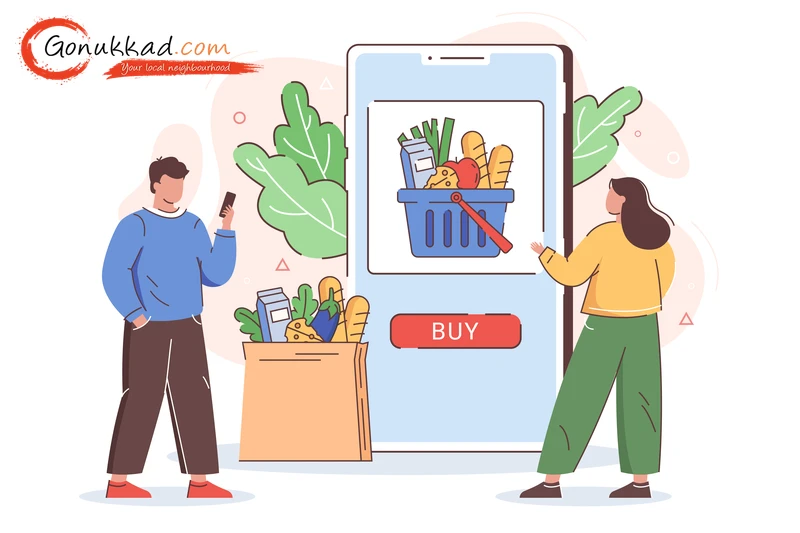
Quick Commerce provides ultra-fast delivery, 10–30 minutes for essential, high-frequency items using hyper-local dark stores. But at the same time, E-commerce offers a wider variety of products at better prices and is best for ordering non-urgent items, typically delivering in 1–5 days. If you're wondering which to choose between Quick Commerce and a Traditional Grocery Marketplace to help your business grow, you're in the right place.
In this blog, we'll look at the Quick Commerce vs Online Grocery Marketplace Comparison, explain the Traditional Grocery Marketplace selling process, and dive into the latest Quick commerce trends in India.
Key Takeaways
- Quick Commerce delivers high-demand, daily essentials in under 20 minutes.
- Traditional marketplaces are better for non-perishables and reaching customers across India.
- Quick commerce relies on daily deliveries to dark stores, while traditional models use large central warehouses.
- Commissions are usually higher in Quick Commerce (15-25%) compared to Traditional (5-20%).
- The Quick commerce market in India is no longer just a metro city thing.
What Is Quick Commerce?
Quick Commerce is a new way of selling in which products reach customers in 10 to 30 minutes. In 2026, this became a daily habit for millions.
How it works: Platforms don't use big warehouses outside the city. Instead, they use Dark Stores. These are small, hidden mini-warehouses in your local neighborhood.
The Big Players: Blinkit leads the market with over 50% share, followed by Zepto (29%) and Swiggy Instamart.
Focus: It is strictly for daily essentials. Therefore, if you sell bread, eggs, chips, or even chargers and small gifts, this is where your customers are.
Traditional Grocery Marketplaces Explained
It is the older "Ecommerce" model, like Amazon Fresh or BigBasket. Here, the delivery takes anywhere from 4 hours to 2 days.
How it works: They have giant warehouses that store thousands of products. When a customer orders, the item is shipped from a central location.
Product Range: You can sell almost anything here. While a dark store only has space for 3,000 items, an Amazon warehouse can hold millions.
Scalability: This model is a traditional grocery marketplace selling process at its best for those who want to sell their brand to every corner of India, not just one neighborhood.
Quick Commerce Market Trends India
The Quick commerce market in India is no longer just a metro city thing. It is growing at 40% every year and is expected to hit a $7 Billion+ GMV (Gross Merchandise Value) by the end of this year.
Tier-2 Expansion: Apps are now common in cities like Lucknow, Jaipur, and Indore.
Beyond Food: People are now ordering iPhones, clothes, and makeup via quick commerce.
Profitability: For the first time, platforms like Blinkit are showing profits. It means they are here to stay, and they are looking for more reliable sellers.
EV Revolution: Almost all deliveries are moving to Electric Vehicles to save costs, which might lead to lower delivery fees for sellers in the future.
Quick Commerce vs Traditional Grocery Marketplace: The Detailed Comparison
| Feature | Quick Commerce (Blinkit/Zepto) | Traditional (Amazon/BigBasket) |
|---|---|---|
| Delivery Speed | 10 to 30 Minutes. | 1 to 3 Days. |
| Customer Intent | Emergency or instant craving. | Planned monthly shopping. |
| Stock Delivery | You must send stock to many local dark stores. | You send bulk stock to one or two big warehouses. |
| Seller Fees | High (15% to 25% + logistics). | Moderate (5% to 20% depending on item). |
| Onboarding | Usually 3 to 7 days. | Usually 7 to 14 days. |
| Returns | Very low | Higher |
Read Also:
Register as a Seller on 5 Quick Commerce Companies in India: A Complete Guide
Pros and Cons: A Simple Guide for Sellers
For Quick Commerce
| Pros | Cons |
|---|---|
| You sell items daily, so your money doesn't stay stuck in old stock. | If a packet is slightly torn, the dark store will reject your entire batch. |
| A single dark store can process 1,000+ orders a day, giving you huge sales. | You have to keep checking stock levels every few hours. |
| Only a few sellers are allowed per neighborhood dark store. | The platform takes a bigger cut because they deliver so fast. |
For Traditional Marketplaces
| Pros | Cons |
|---|---|
| You can be sitting in Kerala and selling to someone in Delhi. | You are competing with thousands of other sellers and big brands. |
| Better for items with smaller profit margins like bulk grains. | It takes time to rank your product on page 1 of search results. |
| You get tools like A+ Content to tell your brand story. | Shipping individual heavy boxes across India can get expensive. |
Which Is Better for New Sellers?
Quick Commerce: If you are a local wholesaler or shopkeeper in a big city, dealing in daily-use items like snacks, dairy products, or cleaning supplies, choose Q Commerce.
Traditional Marketplace : If you have your own brand and want to reach everyone in India, traditional marketplaces are the right option.
In 2026, most smart sellers are doing both. They use Quick Commerce for their best-selling 5 items and Traditional Marketplaces for their full range of 50 items.
Conclusion
To wrap it up, Quick Commerce is like a fast-moving business model, great for quick money and high volume in cities. Traditional Grocery Marketplaces are good for targeting a wide audience, and perfect for building a long-term big brand. For a new seller in 2026, the best strategy is to start local with Quick Commerce and then expand nationwide.
Related Post:
1. How To Sell on Zepto in 2026: Seller Registration & Growth Guide
2. Step-By-Step Grocery Marketplace Seller Registration Process in India
3. How To Register As A Seller On Grocery Marketplaces In India
4. Grocery Store Business Plan: A Guide For Small Retailers In India
5. Complete Guide to Grocery Marketplace India Seller Registration
6. Documents Required for Grocery Marketplace Seller Registration in India
7. Grocery Marketplace Commission Structure in India: What Sellers Must Know
Q. Is it hard for a new seller to join Blinkit or Zepto?
A. If you have a registered business (GST) and your products meet the quality standards, you can get approved in less than a week.
Q. What are the main documents needed?
A. For most platforms, you need a GST Certificate, a PAN Card, Bank Account details, and an FSSAI License if you are selling any food items.
Q. Do I have to deliver the orders myself in Quick Commerce?
A. No, the platform, like Blinkit or Zepto, has its own team of riders.
Q. Can I sell clothes on Quick Commerce?
A. Yes, in 2026, fashion and electronics have become a huge part of the Quick commerce market in India.
Q. Which platform has the lowest commission?
A. Traditional marketplaces like Amazon or Flipkart generally have lower commission rates (5-10%) than Quick Commerce, which can charge 15-25% due to the high cost of 10-minute delivery.
Supercharge your Business:
Go from surviving to tdriving!
Amplify sales witd our expert account management. Unleash your true potential now!
Call Us