ChatGPT
 Perplexity
 Claude
 Google AI
 Grok
Grok
Summarize this article with an AI assistant.
How to Sell Home Appliances on Amazon in 2026
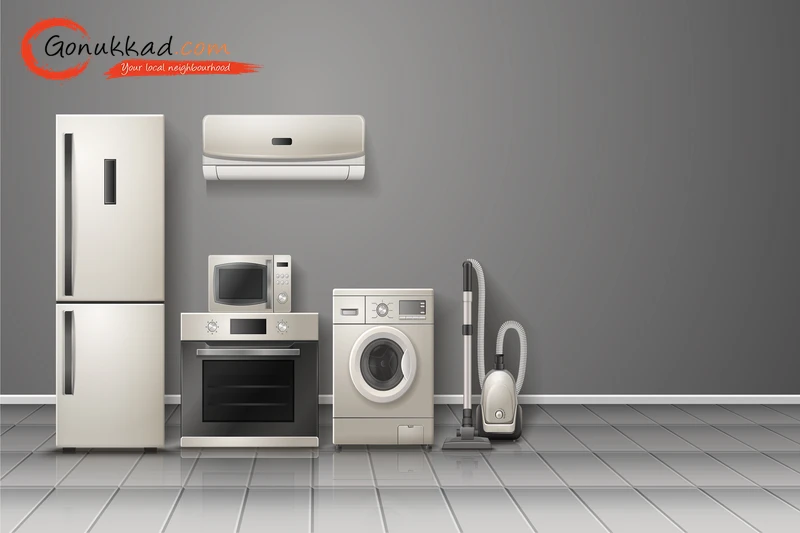
If you're a local shopkeeper or someone planning to start a new business, there has never been a better time to sell appliances on Amazon. Customers are moving away from crowded markets to buy their mixies, geysers, and refrigerators online.
In this complete Amazon home appliance seller guide, we'll look at the step-by-step process to sell appliances on Amazon, logistic options, and Amazon seller ungating home and kitchen. Plus, you will see how expert assistance from Gonukkad can help you with Amazon seller onboarding.
Key Takeaways
- Amazon India’s 2026 fee update drops referral fees to 0% for items priced under ₹1,000.
- Any small retail shop owner with a GST number and a bank account can start selling appliances on Amazon.
- Options like Easy Ship let Amazon logistics agents pick up packages directly from your doorstep.
- Selling major electronics requires invoice verifications, but standard kitchen appliances are much simpler to sell.
- Gonukkad’s Amazon account management services cover everything from seller account setup to daily optimization, saving you months of trial and error.
How to Sell Major Appliances on Amazon
Turning your local business into a nationwide online store might seem stressful, but breaking the process into steps makes it completely manageable.
Here is the step-by-step guide to selling home products online on Amazon:
1. Register as an Amazon Seller
- To set up your online store, you need basic business documents.
- Go to the official Amazon India Seller Central portal and click 'Start Selling'.
- Enter your mobile number and official email address to generate your seller login credentials.
- Put in your registered business name and verified GSTIN along with your PAN details.
- Enter your business bank account number and IFSC code to ensure direct payouts.
- Complete the mandatory identity verification call or document upload requested by the Amazon onboarding team.
- Access your seller dashboard to start listing products in your live catalog.
2. Listing Your Products
Once your Amazon seller dashboard is active, you need to present your products clearly so customers can click the buy button.
There are generally 2 listing scenarios:
- If the home product is available on Amazon, you don’t need to upload new photos. Search for the existing item by its ASIN or barcode, enter your specific price, state your stock level, and match the existing page.
- If you have a new brand of home product that is not currently listed on Amazon, then you must create a completely fresh listing. It involves uploading high-resolution white-background photos, writing descriptions, and picking a specific price.
3. Deliver to Customer
Once an order rolls in, you need to get the item safely to the customer’s doorstep. You can pick from 3 delivery models based on your operational capacity:
Fulfillment by Amazon (FBA): You pack your appliances and ship them to an Amazon warehouse in bulk. Amazon takes care of storage, fast Prime delivery, and any customer returns automatically while maintaining all Amazon FBA appliance category requirements.
Easy Ship (ES): You store the inventory at your own local shop or godown. When an order lands, you pack it up, and an Amazon logistics courier comes right to your door to handle the delivery.
Self-Ship (SS): You manage the entire storage, packaging, and delivery using your own trusted local delivery staff or third-party courier services.
4. Get Paid Every 7 Days
You will get paid for your delivered orders in 7-day payment cycles after deducting the Amazon fees, with funds deposited directly into your bank account.
To prevent surprises when checking your weekly bank settlements, you must understand how Amazon calculates its deductions. Let's look at a real-life example for an appliance sold via the Easy Ship channel:
Real-Life Example of Amazon Fee Deduction
Imagine you are selling a premium electric kettle priced at ₹1,200. However, it is priced above ₹1,000, so it falls outside the zero-referral bracket.
| Fee | Calculation | Amount Deducted |
|---|---|---|
| Gross Selling Price | Paid by the customer | ₹1,200 |
| Referral Fee (Approx. 9%) | Category commission on sale price | ₹108 |
| Closing Fee | Fixed rate based on price slab | ₹56 |
| Easy Ship Fee | Weight handling | ₹68 |
| GST on Amazon Fees | 18% tax applied to total service fees | ₹41.76 |
| Total Deduction | Sum of all marketplace operational fees | ₹273.76 |
| Net Seller Payout | Deposited straight into your bank account | ₹926.24 |
Types of Home Products You Can Sell on Amazon
The home and kitchen category includes a lot of different items, from small tools you can hold in your hand to large machines that need electricity. Here’s a simple list of the main types of appliances you can check out:
| Appliance Category | Common Product Examples | Storage & Handling |
|---|---|---|
| Small Kitchen Appliances | Mixer grinders, induction cooktops, electric kettles, blenders | Low |
| Home Comfort Appliances | Water geysers, air coolers, ceiling fans, room heaters | Medium |
| Major Domestic Appliances | Microwaves, mini-refrigerators, compact dishwashers | High |
| Smart Home Gadgets | Robotic vacuum cleaners, smart air purifiers, digital scales | Low |
Top 7 Mistakes That Kill New Amazon Sellers
- Listing heavy electronic items without checking if they require specific safety certifications will result in your account getting flagged.
- Uploading dark, blurry phone pictures from inside a dark storage room makes customers instantly click away.
- Packing heavy items in cheap, single-ply cardboard boxes leads to broken plastic handles and high return rates.
- Not figuring out who covers the cost of returning heavy home products can quickly erase your monthly profits.
- If you let your stock levels go down to zero, it can hurt your search rankings online and make it difficult for people to find you again.
- Ignoring early complaints about broken plugs or scratched metal can hurt future sales.
- Running broad, unmonitored keyword campaigns burns through your daily budget without bringing in actual sales.
Conclusion
Starting to sell appliances on Amazon is a great opportunity for Indian business owners. The 2026 fee structure completely favors high-volume selling, leaving more profit margins in your pocket. To get succed you need to list your inventory cleanly, pick the right shipping methods, and avoid careless packaging errors.
If you don't know how to proceed, Gonukkad can manage everything for you under their Amazon account management service. From setting up your store to running optimized ad campaigns that convert clicks into cash, they have you covered.
Related Post:
1. How To Sell Handmade Products Online on Amazon
2. How to Sell Electronic Items on Amazon: A Complete 2026 Guide
3. How to Sell a Refurbished Laptop Online on Amazon
4. Selling on Amazon Pet Products: Building a Loyal Niche Audience
5. Selling on Amazon Beauty & Personal Care Products: Niche Brand Building in 2026
6. Selling on Amazon Home & Kitchen Gadgets: Trend Forecasting for 2026
7. How to Get Approval to Sell Toys on Amazon: A Simple Guide
8. How To Sell Digital Products on Amazon in 2026
9. How to Sell Books on Amazon in 2026: Step-by-Step Guide
10. How To Sell Clothes Online on Amazon in 2026
11. How to Sell Shoes on Amazon in 2026
12. How to Sell Jewellery on Amazon in 2026 – A Complete Guide
Q. What documents do Indian shopkeepers need to sell appliances on Amazon?
A. You only need an active GSTIN, a business PAN card, a bank account, and an active phone number with an email ID.
Q. Which are the best-selling home appliances on Amazon right now?
A. The best-selling home appliances on Amazon are multi-functional mixer grinders, smart air purifiers, high-speed compact blenders, induction cooktops, and instant water geysers.
Q. Can I sell major appliances like refrigerators or large washing machines from my local store?
A. Yes, you can use Amazon's heavy and bulky delivery network under Easy Ship or deliver them yourself using Self-Ship.
Q. How much investment do I need to start an appliance store on Amazon?
A. There is no registration fee, so your starting investment is just the cost of your existing inventory.
Q. Is Amazon FBA mandatory for home appliance sellers?
A. No, you can easily use Amazon Easy Ship and keep all your inventory inside your own local shop.
Supercharge your Business:
Go from surviving to tdriving!
Amplify sales witd our expert account management. Unleash your true potential now!
Call Us