ChatGPT
 Perplexity
 Claude
 Google AI
 Grok
Grok
Summarize this article with an AI assistant.
Quick Commerce vs Ecommerce: What Sellers Should Know
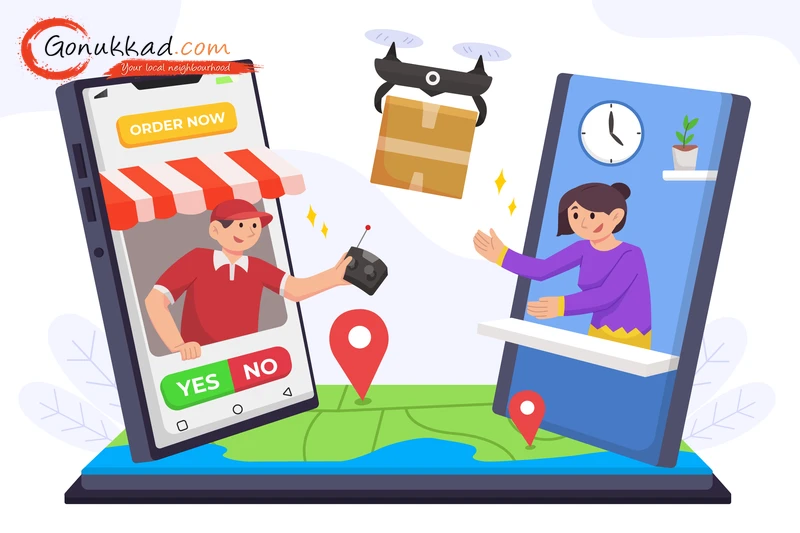
Quick commerce and ecommerce business are two ways to sell products online, but they work differently. Ecommerce involves selling items through websites, where customers can browse and order at their own pace, often with delivery times of a few days. On the other hand, quick commerce focuses on fast delivery, usually same-day delivery in 10 minutes. For online sellers, understanding Quick Commerce vs Ecommerce is the difference between scaling up or shutting down.
In this blog, we'll take a look at what's the difference between Quick Commerce vs Ecommerce. Plus, if you're thinking about selling online, check out Gonukkad's ecommerce account management service for top platforms like Amazon, Flipkart, or Meesho.
Key Takeaways
- Quick commerce delivers products in under an hour, while ecommerce may take days.
- Quick commerce relies on local dark stores, while ecommerce uses larger warehouses.
- Quick commerce often has higher delivery fees, whereas ecommerce might offer free shipping for larger orders.
- Quick commerce focuses on convenience and speed, while ecommerce emphasizes variety and selection.
- Shoppers buy larger, planned baskets on e-commerce but use quick commerce for small, urgent impulse purchases.
What is E-Commerce
E-commerce, refers to buying and selling products or services over the internet. It allows customers to shop online from anywhere using their smartphones. It allows independent brands to display a wide range of products to customers all over the country. They can take orders through organized online systems, connecting sellers in industrial areas directly to consumers anywhere in the nation.
How Does E-Commerce Work and What Are Its Key Features
1. How E-Commerce Works
a.) Seller Account Setup
Sellers register on popular marketplaces, completing mandatory GST validation and banking integration.
b.) Product Listing
Brands upload high-definition images, detailed search descriptions, and correct pricing to build their online catalogs.
c.) Order Placement
Online buyers browse storefronts, add items to digital carts, and checkout using integrated digital payment gateways.
d.) Order Processing & Fulfillment
The seller packs the ordered items securely in dedicated facility areas and prints corresponding shipping manifests.
e.) Logistics & Shipping
Third-party long-haul couriers transport the packages via regional sorting facilities across state lines.
f.) Delivery & Post-Sale Services
Final delivery agents drop off packages at the buyer's home, while backend teams manage returns, exchanges, and reviews.
Related: Ecommerce Business Models: Impact, Types & Examples
2. Key Features of E-Commerce
- 24/7 Accessibility: Virtual stores run continuously without closing hours, letting buyers shop whenever they want.
- Global Reach: Small brands can easily sell to customers nationwide without needing expensive regional physical outlets.
- Product Variety & Customization: Platforms can display thousands of unique items, letting buyers sort through endless color and size variations.
- Marketing & Analytics: Merchants can track store visitor habits and run targeted ad campaigns using deep consumer data.
- Social Technology: Websites integrate customer reviews and shared media, building fast social proof that drives buyer trust.
What is Quick Commerce
Quick commerce is a new way of shopping that delivers your items super fast, usually in under 30 minutes. It replaces long shipping routes with local delivery teams that can move quickly. Instead of sending packages from faraway warehouses, quick commerce uses nearby storage spaces to get what you need right away.
How Does Quick Commerce Work and What Are Its Key Features
1. How Quick Commerce Works
a.) Local Inventory Setup
Micro-warehouses called dark stores are placed inside busy city neighborhoods and packed with high-demand goods.
b.) Customer Order Placement
Nearby app users buy something and complete instant digital checkouts.
c.) Automated Routing
The platform's automated engine instantly sends order specifics to the nearest dark store floor team.
d.) Rapid Picking
In-store staff follow optimized routes to pick and pack items in under three minutes.
e.) Smart Dispatch
Bags are handed to ready delivery partners who get real-time, traffic-beating routes on their screens.
f.) Delivery & Replenishment
Riders drop off orders within minutes, while automatic inventory systems track stock drops to reorder items immediately.
Related: What is the Difference Between E-commerce and E-business?
2. Key Features of Quick Commerce
- Ultra-Fast Delivery: The entire business model is built around getting orders to the buyer's door within minutes.
- Hyperlocal Fulfillment: All orders are kept within dark stores to make sure transit times stay low.
- Micro-Fulfillment Centers: Compact, closed-door dark stores are optimized for lightning-fast picking rather than standard foot traffic.
- Small Basket Sizes: Orders usually consist of a few immediate top-up items rather than huge monthly grocery hauls.
- Real-Time Inventory Management: Live software updates stock counts every second to avoid selling items that are out of stock.
- AI & Route Optimization: Smart algorithms predict local buying trends and map out the fastest paths for delivery riders.
What Are the Main Differences Between E-Commerce and Quick Commerce
The main difference between traditional E-Commerce and Quick Commerce (Q-commerce) is speed versus selection. E-commerce focuses on wide product catalogs and delivers in 1-7 days from large warehouses. Q-commerce delivers a limited range of daily essentials in minutes, typically relying on hyperlocal "dark stores" near customers.
| Operational Metric | E-Commerce Setup | Quick Commerce Setup |
|---|---|---|
| Delivery Speed | Standard delivery windows spanning 1 to 7 days. | Ultra-rapid fulfillment within 10 to 30 minutes. |
| Product Range | Massive catalogs containing millions of unique items. | Tight inventories containing 3,000 to 5,000 fast-moving items. |
| Logistics & Infrastructure | Large regional distribution hubs and cross-country transport. | Hyperlocal delivery networks using urban dark stores. |
| Customer Expectations | Looking for competitive pricing, deep discounts, and high variety. | Demanding pure convenience, speed, and real-time stock accuracy. |
| Business Model & Margins | Balanced profit margins driven by large logistics scale. | Slim item margins reliant on volume, delivery fees, and platform ads. |
| Average Cost per Order | Higher order values generally range from ₹800 to ₹3,000+. | Low average basket sizes usually fall between ₹200 and ₹600. |
Related: Top 5 Ecommerce Product Listing Services Company in India
Conclusion
Understanding the differences between traditional e-commerce and quick commerce can significantly impact your online selling strategy. E-commerce offers a wide variety of products but takes longer to deliver, while quick commerce focuses on fast delivery for urgent needs. Choose the right option for your business, and let Gonukkad help you set up and optimize your online store on platforms like Amazon, Flipkart, and Meesho.
Q. Why is it called "Quick" commerce?
A. It’s called "Quick" because the entire process from placing the order to the rider reaching your door is designed to happen in under 30 minutes.
Q. Can fashion and lifestyle brands survive on quick commerce networks?
A. Quick commerce platforms are beginning to experiment with basic apparel, but standard e-commerce remains the best choice for fashion due to sizing variations and high return rates.
Q. Do dark stores allow regular walk-in customers to purchase goods?
A. No, dark stores are local mini-fulfillment spaces closed to the public, laid out internally for rapid order picking by staff members.
Q. Are delivery charges higher in Quick Commerce?
A. Since the company is moving a delivery partner for just one or two items very quickly, they charge a convenience fee.
Q. Can I switch from E-commerce to Q-commerce easily?
A. Yes, you can, and experts like Gonukkad can help you turn your ecommerce business by managing your seller accounts on different platforms.
Supercharge your Business:
Go from surviving to tdriving!
Amplify sales witd our expert account management. Unleash your true potential now!
Call Us